Before we start, there is something need to be understood: the ancient animal does not have to be in a form of dinosaur. Dinosaurs lived between 225 million up to 25 million years ago. Meanwhile, the ancient animal lived in the ancient time and the same time where the first or pre-historical humans lived.
I will not deny that there would be some findings of various ancient animal fossils such as vertebrates, invertebrates, sea animals, and land animals in Indonesia, mainly in Sangiran. It was because the soil layer in Sangiran was from sea. Also, ancient humans, who were in the same period with the ancient animals, were found there.
After doing some research, I can conclude that the ancient animals found in Sangiran are actually as great as the ancient animals found in other hemispheres. It is too bad that dinosaurs were not found in this lovely country (Indonesia). So, we can say that Sangiran gives another contribution in answering the mystery of this world.
In my simple notes, there are some vertebrates fossils found in Sangiran:
The most interesting thing from vertebrate fossils in Sangiran is the elephant category fossils because they were from various kinds of elephants and even from more than half kinds of elephants that had ever been found here such as tetralphodon, mastodon, stegodon, and elephas. Also, the biggest elephant fossils in the world were found in Sangiran.
Finally, we all hope that this world’s heritage will not disappear and will become something irreplaceable. As I am not an expert in this field, any input and correction are welcomed.
Enjoy, peace, and love from Sukra (085 190408)
Sunday, October 26, 2008
The Ancient Indonesian Animal (Sangiran 3)
Saturday, October 25, 2008
The Evolution of Ancient Human (Sangiran 2)
Where does human being originated from? The most likely answer is from the mothers’ womb. Lol. And now, where do ancient humans come? Well I am not so sure. Most people say that the ancient Asian humans were from Himalaya Mountain; where there was a plate displacement took place 18 million years ago. Then, evolution occurred 5 million years ago, people moved from the South West to the North east (Yunnan Yuanmou that crosses Yang Zi River, Shensi Latian, Huang He River, and Zhou Kou Dian Beijing Site) and to the South East (to the Sangiran Site).
For your information, I limit this story only to Indonesian area especially Sangiran Site. The area that is approximately around 60 km square is located at the foot of Lawu Mountain. This site is also known as Sangiran Dome because of its location as the warehouse of the ancient humans and animals fossils. The study and the finding in this location were started by G.H.R Von Koenigswald (Berlin) and his finding was closely related to the finding of the ancient human (Pithecanthropus Erectus) by Eugene Dubois (1891) in Trinil, East Java, Indonesia.
Here in the article, Sangiran will show itself as one of the revealer of the world’s secrets since through this site, the ancient humans evolution history is almost be revealed. It is because the ancient human fossils found were from the Pliosen era about 2 million years ago until the Holosen era about 15 thousand years ago. Their link was unbreakable and the fossil findings were about 50% of the Homo Erectus population in the world.
Following were the Indonesian ancient humans with their link:
01. Meganthropus Palaeojavanicus (Sangiran)
02. Pithecanthropus Robustus (Trinil)
03. Pithecanthropus Erectus (Homo Erectus)
04. Pithecanthropus Dubius (Jetis)
05. Pithecanthropus Mojokertensis (Perning)
06. Homo Javanensis (Sambung Macan)
07. Homo Soloensis (Ngandong)
08. Homo Sapiens Archaic
09. Homo Sapiens Asia Neandertahlman
10. Homo Sapiens Wajakensis (Tulungagung)
11. Homo Modernman
Does this complete ancient Indonesian human evolution life circle prove that Charles Dharwin’s theory is right?
Enjoy, peace, and love from Sukra (085 190408)
Friday, October 24, 2008
The History of Java Island, Indonesia (Sangiran_1)
Have you ever wondered whether it is possible to create an island if the nature itself is damaged? Is it possible for human beings to create an island such as Java Island, Indonesia? As far as I know, it is only nature that can create islands and it certainly undergoes process that takes a very long time. One of the examples is the Java Island that was created naturally almost 20 million years ago.
As far as I know, the process of Java Island’s creation is due to the tectonic plate theory, the volcano eruption, etc. The plates tectonic theory explains that the continents in the earth are like frozen rafts of a stream flow that are dragged along with the bottom of the ocean. When the plate displacement is done, the creation of the islands takes place. The islands are created due to the drowning of the highland in the shore (continental islands) and the existence instable zones in the earth’s crust (the island bow). It is called continental islands since Java Island, Sumatra Island, and Kalimantan Island used to be connected. Meanwhile, it is named the islands bow as there were trough and the number of volcanoes that showed the volcanic activity.
It can be said that the Java Island is almost 20 million years because invertebrate and vertebrate fossils were found in the Sangiran Site, Central Java, Indonesia. However, at the moment we are going to see from its soil layer first.
In this site, there are 5 soil formations with their layers that can be noticed directly which are one of the miracles in Sangiran. The soil formations are:
The Kalibeng Formation (Puren) is 5 million-1.8 million years with its layers:
The Pucangan (Sangiran) Formation is 1.8 million-1million year with its layers:
The Kabuh (Bapang) Formation is 1 million-250 thousand years with its layers:
The Notopuro (Phojajar) Formation is 250 thousand-15 thousand years with its layer:
The Terrace Solo (Kali Pasir) Formation is 15 thousand-1.5 thousand years. It only has the sediment of the gravel river.
By the way, this layer information is only additional info and notes because I am afraid it will be scattered and lost. It is too bad I am not a soil expert. If this scarce information is lost, it is gonna be difficult to recollect it. These soil layers are also used to determine the age of the earth.
For your information, there is a mud-hole that actively spouts salted water foam out in the middle of the farm in Sangiran. From the previous information, the soil layers, and the mud-hole, I can conclude that Java Island used to be a sea and because of the plates displacement, it became Java (Sumatra, Kalimantan, and Java used to be united). Also, I believe that the island was formed due to the instable earth’s crust, erosion, and the increase of the sea water level. Well, since I am not the expert, any suggestion, input, and recommendation are welcomed as I make the conclusion based on the data I collected.
Last but not least, one of the world’s secrets (though it is not revealed completely yet) does exist in Sangiran, Central Java, Indonesia.
Enjoy, peace, and love from Sukra. (083 190408)
Photo Reference: http://www.klett-verlag.de/sixcms_upload/media/100/tektonik_welt_500.jpg
Friday, October 17, 2008
Sukra
For Indonesian people, Sukra sounds like a kind of nuts. It is so sad, yet nothing I can do about it. I think it is a bit hard to ban some names to be a product’s brand. Sukra is actually a character in Wayang (traditional Javanese or Balinese drama performance), with its full name Sukra Maharesi.
Sukra was a human with power that should only be possessed by god. With the power owned, gods became anxious, afraid that they would lose their dignity, and worried that the gods’ fate will prevail any longer. The power he owned was Amertasanjiwani, a power that could reawaken dead people. By having the power, he helped others without thinking about status and friends or enemies. In other words, Sukra means eternal immortality in professionalism.
Sukra had a daughter named Dewayani and a student named Kaca. Kaca was a god’s envoy (but his identity was not known by Sukra) who was assigned to take in Amertasanjiwani and reminded his teacher that the power should not be taught to anyone.
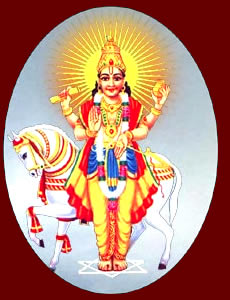
*In Vedic legend, Sukra was the teacher of Asura (giant). While Kaca was learning, Asura found out his identity and finally he was killed by Asura. Sukra as Asura’s friend and teacher reawakened Kaca, who was actually his enemy.
Dewayani’s love was rejected by Kaca because of his desire to be a brahmacarya that means not getting married forever. Finally Dewayani decided to marry to Prabu Yayati, who begot a line of Pandawa’s family.
The gloomy part of this story was that Prabu Yayati, who was a bold and courageous king, turned into an old man as he was cursed by Sukra. It happened since he defied his prohibition that was having an affair with another woman.
That’s the short story of Sukra. By the way, in astrology Vedic, Sukra was another name for Venus in Sansekerta language that means white or light; for Friday or sperm in Javanese langguage.
Enjoy, peace, and love from Sukra. (130 170708)
Reference:
Indonesian Wayang Encyclopedia, vol. 4, Sena Wangi, Jakarta, 1999.
http://www.kamalkapoor.com/puja/images/sukra_venus.jpg
Thursday, October 16, 2008
The History of Wayang
After discussing about the wayang performance in the previous article, I will talk a bit about its growth in Indonesia.
Wayang is an Indonesian’s masterpiece which has been known since 1500 BC. Its growth has related to other element and developed ever since until its recent form and content. So, the current wayang is not the same as the previous wayang, and that the upcoming wayang will not be the same as the current wayang. However, each of its changes does not affect its genuineness since wayang has firm base that are hamot, hamong, and hamemangkat. By having those things, wayang has resistance and ability to develop through the centuries. Besides, there is also a wayang development policy that has been outlined by Trikarsa and Pancagatra.
Hamot is openness in accepting influence and input from both inside and outside. Hamong is ability to filter the new element which is suitable to the current value, and then accept it as the proper value for wayang as a supply in order to move forward according to the civilization. Hamemangkat is a value which becomes a new value through some long processes and which is carefully absorbed. Meanwhile Trikarsa is a determination to preserve, develop, and glorify wayang, which was carried out by Pancagatra. Therefore, wayang is able show its ability since the ancient time, Hindu era, and even up till now.
The wayang development period started in an ancient time that was when our ancestor believed in animism and dynamism. In these beliefs, the spirit of the dead people is believed to be still alive and that live things have power. That is the reason why they are adored and asked for help. So, to worship the ancestors’ spirit, they perform a certain ritual that is created in a form of pictures and sculptures. The ancestors’ spirit worshiped is known as hyang or dahyang.
People can communicate with the hyang through a medium who is usually called syaman to ask for his help and protection. So, the ritual adoration of the ancestors is the initiation of wayang. Hyang becomes wayang and syaman is the puppeteer. Meanwhile, the story is the ancestors’ adventures and experiences. The language used is the original Javanese.
In its development from the past up to now, there are some changes in it, such as in its shape and the wayang art which used to be similar to a wayang relief in temples and now it becomes more imaginative, in a way that it is does not look like a human, the parts of the body are complete and functional, not proportional, yet very wonderful. It is because there is rejection to idols, but it still want to present the wayang characters as human beings, complete with their names and their traits. Moreover, the performance is only at night and takes about 7-8 hours because it is intended for the spiritual journey in understanding the essence of life and taking ourselves closer to the Almighty God.
In summary, wayang is a culture that keeps on growing and being loyal to its mission and function it has, that is as a medium of entertainment as well as messages deliverance. In other words, wayang is a means of information, education, and mass communication that are familiar to its supportive society, with its final purpose that is establishing the nation and country towards the realization of the just and wealthy Indonesia based on Pancasila (the 5 basic principles of the Republic of Indonesia).
Enjoy, peace, and love from Sukra. (020 010108)
Reference:
Indonesian Wayang Encyclopedia, Jakarta, Sena Wangi, 1999
http://www.wamister.ch/allerlei/exindo/wayang.jpg
Wayang Performance
In order to support the government’s program, Visit Indonesia Year 2008, it is good to “peek” one of our cultures that is wayang. What is wayang and what crossing your mind when you hear that word? Is it only a bizarre thing that is performed behind the screen and accompanied by Javanese dialogues and gamelan?
Wayang performance unites various arts, such as drama, vocal, literature, painting, etc. In the performance, there is a central role that is a dalang (puppeteer) who is helped by pengrawit, swarawati, and so on. They create wayang to be an interesting art show in a complete form both esthetically, ethically, and philosophically.
So, what is the interesting part from that performance if we only see the shadow? Well, if you think that way, it is quite a big mistake. Wayang is not merely a shadow perform, but it is a yangane ngaurip that means humans’ life shadow. In other words, through wayang performance, we as humans can think and feel how lives start from the birth until the death and also humans’ life journey to fight for what is right and defeat what is wrong.
As a matter of fact, wayang and puppeteer art are often called total theater. It is so as each wayang character is performed in a total performance and its quality which is expressed in a form of symbols is prioritized. The story and all the equipments are made to express the whole life of human beings. The bare room for wayang performance symbolizes the universe before God created life. The kelir (screen) is symbolized as the atmosphere, the banana tree represents the earth, blencong (light) represents the sun, wayang itself represents people and other human beings, and gamelan represents harmony in life. Moreover, the presence of the audience has its own purpose that is as the spirit being there in the performance. In other words, spectators are the unity in the performance, not only to watch it, but also to think with their thinking ability, social awareness, and philosophy.
Enjoy, peace, and love from Sukra. (019 010108)
Reference:
Indonesian Wayang Encyclopedia, Sena Wangi, Jakarta, 1999.
http://static.flickr.com/64/172088580_954ef25408_m.jpg
Tuesday, October 14, 2008
The Vajrayana Buddhism Spread (Buddhism 3)
You might frequently hear the word “living Buddha” (Tulku) or Vajraguru, Vajracarya, Rinpoche with its incarnation for the umpteenth time. This is the characteristic of teaching that spread to the North and was known as Tibet Buddhism. This teaching with its holy book Kagyur, and Tangyur with Canonical Sansekerta and Tibet language spread to China Bhutan, Nepal, Sikkim, Kashmir, and Mongolia.
There are some sects within this Tibet Buddhism. Great sects are Nyimapa (red), Sakyapa (flower), Kagyudpa (white), and Gelugpa (yellow), whereas some small sects are Shijepa, Zhibyepa, Chonangpa, Shalupa, and Bonpa (black).
In Vajrayana teaching , sect becomes important since it is the identity for them. Following is the information about some great sects:
The Tibet historical journey started with Turfan’s authority (633-842), dissension (843-1026), the new sect rising (1027-1240), and Sakyapa’s rule (1240-1353). It was the time when Tibet became the part of China . Then it was continued with Drukpa Kagyud’s rule (1354-1618), Gelugpa (1642-1951), and finally Dalai Lama left Tibet in 1959.
The spread of Vajrayana Buddhism in Indonesia started when T.J. Lie went to Taiwan. He obtained Red Cherezig’s initiation from Kunga Ani and the arrival of Thrangu Rinpoche from Karma Kagyud sect to Borobudur Temple in 1982. Afterwards, many Rinpoches from many sects and sub-sects visited Indonesia to spread the seed of Vajrayana Buddhism. These days its spreading has been going on in small scale and in a plumbing phase.
This is some information I got from my father’s story and explanation. Feel free to add further information (if any) and correct any mistakes you guys find out. Thanks.
Enjoy, peace, and love. (089 260408)
Thursday, October 9, 2008
The Mahayana Buddhism Spread (Buddhism 2)
If you spend most of your time watching TV, I bet you surely know a movie about a monkey king who undergoes a mission trip to the West for taking a holy book. This article tells about a mission trip to the East (from Nepal to China) to spread the Buddhism. The Mahayana Buddhism is called China Buddhism that is identical to its Shaolin. This belief also exists in Korea, Japan, and Vietnam, with its holy book Maha Tripitaka (Da Zang Jing) Sansekerta Canonical and Mandarin language.
China Buddhism, which is identical to Mahayana, has some other beliefs. Some other mashab (ideologies) existing are Hinayana with Abhi Dharma Kosa (Ju She Zong) sect, Satya Siddhi (Cheng Shi Zong), and Mahayana with Dharma Laksana (Fan Xian Zong) sect, Tri-Sastra (Sam Lung Zung), Vinaya (Lu Zong), Avatamsaka (Hua Yan Zong), Tian Tai (Fa Hua Zong) with sub-sects from Japan which is known as Nichiren, Tantra (Zhen Yan Zong), Sukhavati (Jin Tu Zong) that is known as Amitabha Buddhism (O Mi Tuo Fo), Bodhisatva Avalokitesvara (Guan Yin Pu Sa), and Maha Sthanaprapta (Da Shi Zhi Pu Sa), Zen (Chan Zong) with five sub-sects: Lin Jin Zong, Wei Ji Zong, Cao Dong Zong, Yun Men Zong, and Fa Yan Zong.
Mahayana in Indonesia is close to Zen sect. It is because most of the Chinese wanderers who came to Indonesia were from Fujian and Guandong (South China), where this sect is very dominant in that province. If it is observed, the temples of Mahayana Buddha in Indonesia are related to their headquarters in the origin countries. Some temples in Fujian Province are Kai Yuan Si, Guang Hua Si, Xi Chan Si, Chong Fu Si, and Yung Quan Si, whereas in Guandong are Guang Xiao Si, Nam Hua Chan Si, Liu Rong Si, Yun Men Si, Bie Chuan Si, and Kai Yuan Si.
These days, the teaching of Mahayana Buddhism is mostly acquired from Singapore, Hong Kong, and Taiwan because when it was a Soeharto era, China was considered as communist country and it did not have diplomatic relationship with Indonesia. That is how Taiwan Buddhism came.
Mahayana Buddhism in Indonesia is generally divided into two branches, which are Mahayana Buddhism and Tridharma Buddhism. Mahayana Buddhism is the collaboration of Zen sect and Sukhavati sect (its China value is very strong). While, Tridharma Buddhism (Kelenteng Buddhism) which is in Indonesia is the collaboration of Mahayana Buddhism and Dao Jiao and Ru Jiao traditional culture and the local culture. Some of its growth are Kwee Tek Hoay, Khoe Soe Khiam, Ong Kie Tjay, and Aggi The The.
In fact, Tantrayana sect existed for a short period of time in Indonesia that was in the 9th century, yet it ceased to exist. Tantrayana sect in Indonesia started with the arrival of Subhaka Rasingha, Vajra Bodhi, and Amongha Vajra to Indonesia. When the Tantra was spreading to China, the teaching was assigned to Hui Guo’s student, Ban Hong from Kalingga Indonesia Kingdom. It became the beginning of Laut Kidul Tantra (Borobudur Tantra).
There are some Mahayana ancient temples in Indonesia. Some temples from the 9th century are the sites of Mendut Temple, Pawon Temple, Borobudur Temple, Kalasan Temple, Sewu Temple, and Plaosan Temple, which are located in Central Java, Magelang, and DI Yogyakarta. The temple from the 11th century is Muara Jambi Temple site in Jambi, whereas the temple from the 12th century is Muara Takus Temple site in Pekanbaru, Riau.
This is some information I could present to you all. Feel free to add more information or correction if you think it needs to be rectified. Thanks.
Enjoy, peace, and love. (088 260408)
Friday, October 3, 2008
The Theravada Buddhism Spread (Buddhism 1)
In common society, information about Buddhism outside the beliefs are merely about the how this religion started in Nepal by Siddharta Gautama (556 BC - 486 BC ), the existence of Borobudur Temple, and Siwa Buddha empire such as Majapahit. The Buddhism growth in Indonesia was not started in the 9th century as the temple had been buried under the ground more than 1000 years or from the era of Majapahit Empire that had ended in the 15th century. That is how Buddhism “slept” for about 500 years.
If it is observed deeply, Buddhism in Indonesia grew and started to develop in the 1950s. Buddhism in Indonesia is divided into three mashab (ideologies), which are Hinayana, Mahayana, and Vajrayana. Those teachings are believed by approximately 1.4% out of 240 millions of Indonesia people including those who hold culture beliefs in Tionghoa (Chinese) tradition.
The spread of Hinayana Buddhism that is also known as Theravada Buddhism or Thailand Buddhism was through the south route. We can find this belief that consists of some sects with Canonical Tipitaka (authentic bible) in Pali language more in Srilanka, Myanmar, Thailand, Cambodia, and Laos.
Some sects of Theravada Buddhism are Syama Nikaya, Amarapura Nikaya, Ramanna Nikaya (those are from Srilanka); Thudamma, Shnegyin, Dvara (from Myanmar); Maha Nikaya, Dhammayutika Nikaya(from Thailand, Cambodia, and Laos).
It can not be denied that the growth of Theravada Buddhism in Indonesia is due to ideas of Tridharma Kwee Tek Hoey who invited Bhikku (Buddhist monk) Narada from Srilanka to Borobudur Temple to plant bodhi tree in 1934. It was the starting point of the Buddhism spread. In the 50s decade, the development of Buddhism in Java had started by the consecration of the first Indonesian people, The Boan An, to be a Theravada Bhikku who is known as Ashin Jinarakkhita (1953), Ong Tiang Biauw who is known as Jinaputta (1959), and I Ketut Tangkas who is known as Jinapiya (1959). In the 1970s, Indonesia was visited by Bhikku Win Vijano (Dhammaduta Buddha from Thailand), who was meritorious for the spread and the development of Theravada Buddha which was very close to Thailand sect for about 38 years.
Later, the teaching of Ekayana (Buddhayana) developed in Indonesia with Bhikku Ashin Jinarakkhita as the founder, and the development itself is based on the doctrine of Theravada Buddhism combined with other Buddhism teachings and local tradition culture.
The ancient Theravada Temple in Indonesia is the site of Batujaya Temple which is located in Karawang (West Java) and built in the 4th century.
This short note may not be perfect. Feel free to add information and correction if needed. Thanks.
Enjoy, peace, and love from Sukra. (087 260408)
Picture: Bhikku Narada